


Μπορώ να κολυμπήσω σε μπανιέρα-υδρομασάζ χωρίς χλώριο;
2026-06-19 15:35Water quality management is an unavoidable topic when using a swim spa hot tub. Among the questions that arise, "Is chlorine necessary?" is one that almost every user considers. For individuals who are sensitive to odors, have delicate skin, or simply prefer a "gentler" water experience, the question of whether it is safe to swim in a chlorine-free swim spa is particularly important.
So, can you swim in a swim spa tub without chlorine?
From the perspectives of professional water treatment and public health, this question cannot be answered with a simple "yes" or "no."
This article provides a systematic and in-depth analysis of the water characteristics of swim spa hot tubs, the role of chlorine, and the potential risks associated with chlorine-free operation, helping you develop a scientifically grounded and rational understanding.
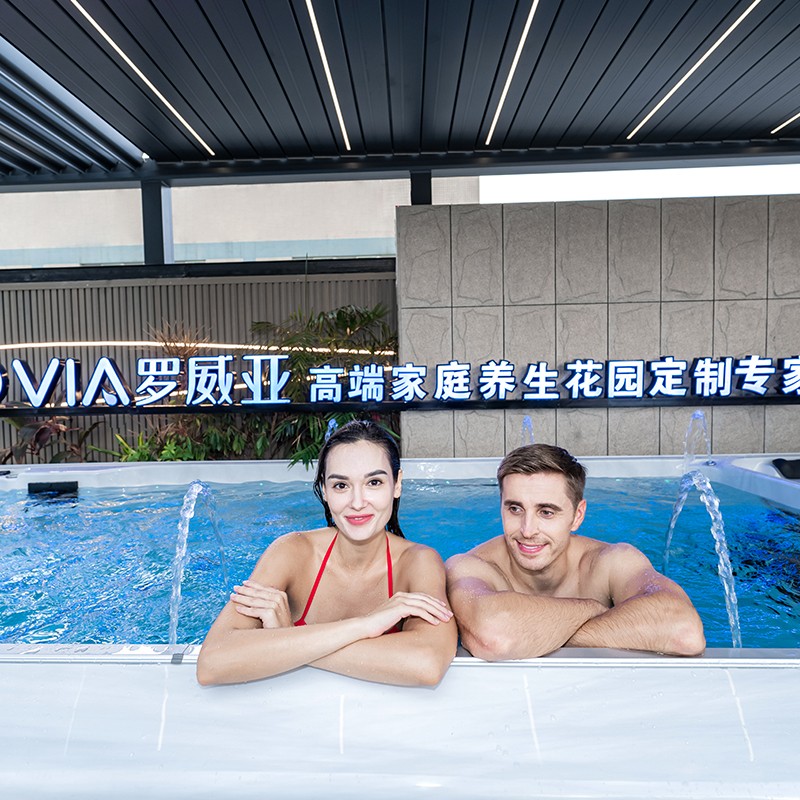
How does the water quality of a swim spa differ from that of a standard swimming pool?
To understand the importance of chlorine in a swim spa hot tub, one must first recognize the specific characteristics of the water body itself.
Compared to traditional large swimming pools, swim spas typically exhibit the following characteristics:
•Relatively small water volume
•Significantly higher water temperatures
•Concentrated usage patterns
•More intensive human contact with the water
It is precisely these characteristics that make swim spa hot tub water more susceptible to contamination and the proliferation of bacteria and microorganisms. In such an environment, the method of water disinfection becomes critically important.
What exactly is the role of chlorine in a swim spa tub?
Chlorine is not merely a chemical with a strong odor; its primary function in a swim spa hot tub is disinfection.
Specifically, chlorine performs the following functions in swim spa hot tub water:
•Killing bacteria and pathogens
•Inhibiting the growth of viruses and fungi
•Reducing the activity of organic contaminants
•Lowering the risk of waterborne diseases
These functions are particularly crucial in a warm, enclosed environment where water is recirculated. Without effective disinfection, swim spa tub water can easily become a breeding ground for microorganisms.
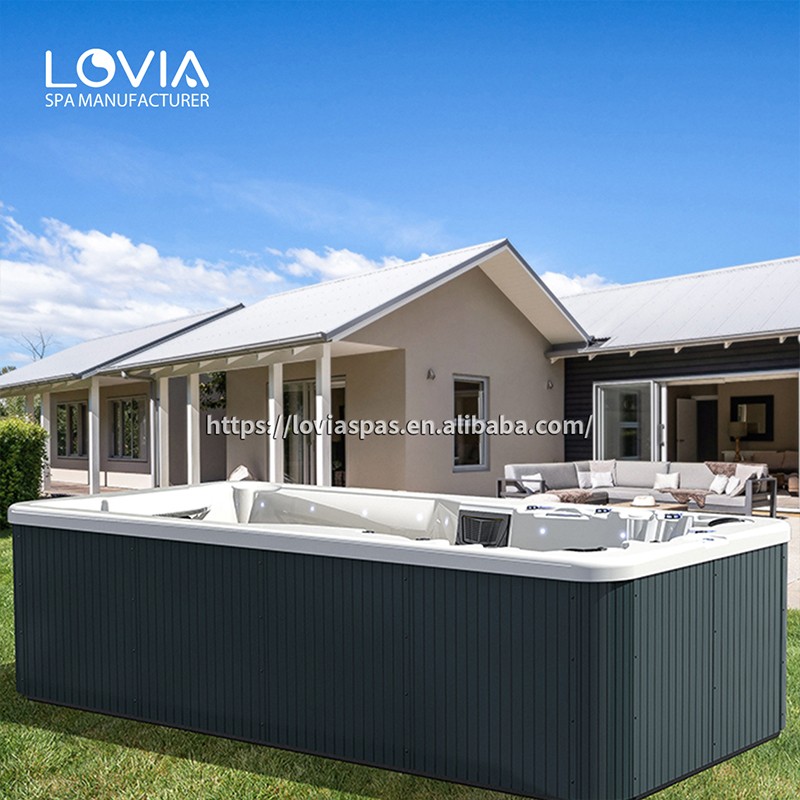
What is "free chlorine," and why is it important?
Free chlorine refers to the chlorine content in the water that retains its disinfecting capability. It is not chlorine that has already bound to contaminants and lost its potency, but rather the active component capable of effective disinfection.
In a swim spa hot tub:
•If free chlorine levels are too low, disinfection capacity is insufficient.
•If free chlorine is absent, the water is essentially unprotected.
•Microorganisms can multiply rapidly within a short period.
Therefore, determining whether a swim spa hot tub is "safe" depends not on whether chlorine was added, but on whether there is a sufficient level of free chlorine present.
What does it mean for a swim spa tub to be chlorine-free?
If a swim spa hot tub contains no chlorine, it usually implies one of the following situations:
•No chlorine-based disinfectant has been used at all.
•Free chlorine levels have dropped to extremely low levels.
•Chlorine has been depleted and rendered ineffective by a large amount of organic matter.
Regardless of the specific scenario, the common result is a significant reduction—or even total loss—of the water's sustained disinfection capability.
In such a swim spa hot tub, the safety of the water relies heavily on the effectiveness of alternative disinfection methods.
Is it safe to swim in a chlorine-free swim spa?
From a professional standpoint, swimming in a swim spa hot tub with insufficient or no free chlorine is generally considered unsafe.
The reasons are as follows:
•Chlorine is currently one of the most stable and well-established disinfection methods.
•The high-temperature environment of a swim spa hot tub accelerates bacterial growth.
•Without sufficient free chlorine, the water cannot effectively suppress pathogens over time.
As established by professional consensus on water treatment:
If free chlorine levels are too low, the swim spa hot tub may not be thoroughly disinfected, thereby increasing the risk of infection or waterborne diseases.
Why do swim spas require chlorine more than cold-water environments?
A frequently overlooked fact is that the higher the water temperature, the more active microorganisms become.
Swim spa hot tubs are typically maintained at temperatures significantly higher than standard swimming pools, which leads to two direct consequences:
•Microorganisms multiply at a significantly faster rate.
•Disinfectants, such as chlorine, are depleted more rapidly.
This means that in a swim spa hot tub—if chlorine is absent or levels are insufficient—the water's safety deteriorates much faster than it would in a cold-water environment.
Where do bacteria in a swim spa come from if there is no chlorine?
Even if the water in a swim spa tub looks crystal clear, it may contain numerous invisible sources of contamination, such as:
•Bacteria introduced from the human body
•Residue from sweat and skin oils
•Trace amounts of urine or other organic matter
•Microorganisms falling into the water from the air
Without the continuous inhibitory effect of chlorine, these contaminants provide an ideal environment for bacteria to survive and multiply.
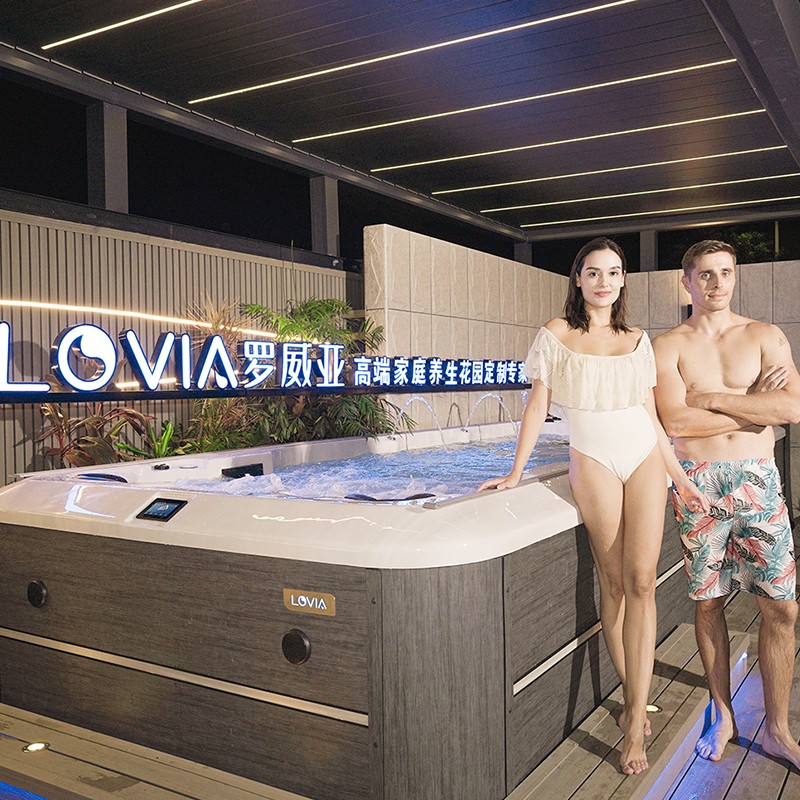
Why do chlorine-free swim spas pose a more hidden risk?
One danger is that water quality issues do not always manifest immediately as cloudiness, unpleasant odors, or discoloration.
In a chlorine-free swim spa hot tub:
•The water may remain clear for a short time
•There may be no noticeable odor
•The user experience may seem normal
However, at a microscopic level, bacterial populations could be rapidly increasing. Exposure to such water elevates the risk of infection.
Are there swim spa tubs that require absolutely no chlorine?
Θεωρητικά, ορισμένα συστήματα ενδέχεται να μειώσουν τη χρήση χλωρίου μέσω εναλλακτικών μεθόδων, αλλά αυτό δεν είναι το ίδιο με την πλήρη εξάλειψη της ανάγκης για απολύμανση.
Ανεξάρτητα από τη μέθοδο που χρησιμοποιείται, εάν επαναχρησιμοποιηθεί το νερό του κολυμβητηρίου, το σύστημα πρέπει να διαθέτει τουλάχιστον ένα από τα ακόλουθα:
• Συνεχής, αποτελεσματική βακτηριοκτόνος ικανότητα
• Ένας μηχανισμός για την αναστολή της εξάπλωσης παθογόνων μικροοργανισμών
Εάν ένα υδρομασάζ κολύμβησης-σπα λειτουργεί χωρίς χλώριο και δεν διαθέτει ισοδύναμη ικανότητα απολύμανσης, η ασφάλειά του δεν μπορεί να εγγυηθεί από άποψη υγιεινής.
Γιατί το ότι η φράση «χαμηλή χλωρίνη» δεν σημαίνει και «κανένας κίνδυνος»;
Κάποιοι μπορεί να σκεφτούν, μππ ...μπάνιο, το προφίλ κινδύνου πολύ χαμηλών επιπέδων ελεύθερου χλωρίου είναι πολύ παρόμοιο με το να μην υπάρχει καθόλου χλώριο.
Οι λόγοι είναι:
• Η απολύμανση απαιτεί ελάχιστη αποτελεσματική συγκέντρωση
• Κάτω από αυτό το επίπεδο, η βακτηριοκτόνος αποτελεσματικότητα μειώνεται σημαντικά
• Τα παθογόνα δεν σταματούν να αναπαράγονται απλώς και μόνο επειδή τα επίπεδα χλωρίου είναι χαμηλά
Επομένως, η ασφάλεια ενόςκολυμβητικό σπαΤο τζακούζι δεν εξαρτάται από το αν υπάρχει χλώριο, αλλά από το αν υπάρχει επαρκές ελεύθερο χλώριο.
Ποιοι κίνδυνοι για την υγεία σχετίζονται με την κολύμβηση σε σπα χωρίς χλώριομπάνιομικρό;
Χωρίς αποτελεσματική απολύμανση, το νερό στα υδρομασάζ μπορεί να γίνει μέσο μετάδοσης διαφόρων κινδύνων για την υγεία, όπως:
• Ερεθισμός ή λοίμωξη του δέρματος
• Δυσφορία στα μάτια ή τα αυτιά
• Πεπτικά προβλήματα
• Ερεθισμός της αναπνευστικής οδού
Αυτοί οι κίνδυνοι μπορεί να μην εκδηλωθούν αμέσως, αλλά η πιθανότητα εμφάνισής τους αυξάνεται καθώς μειώνεται η ικανότητα απολύμανσης του νερού.
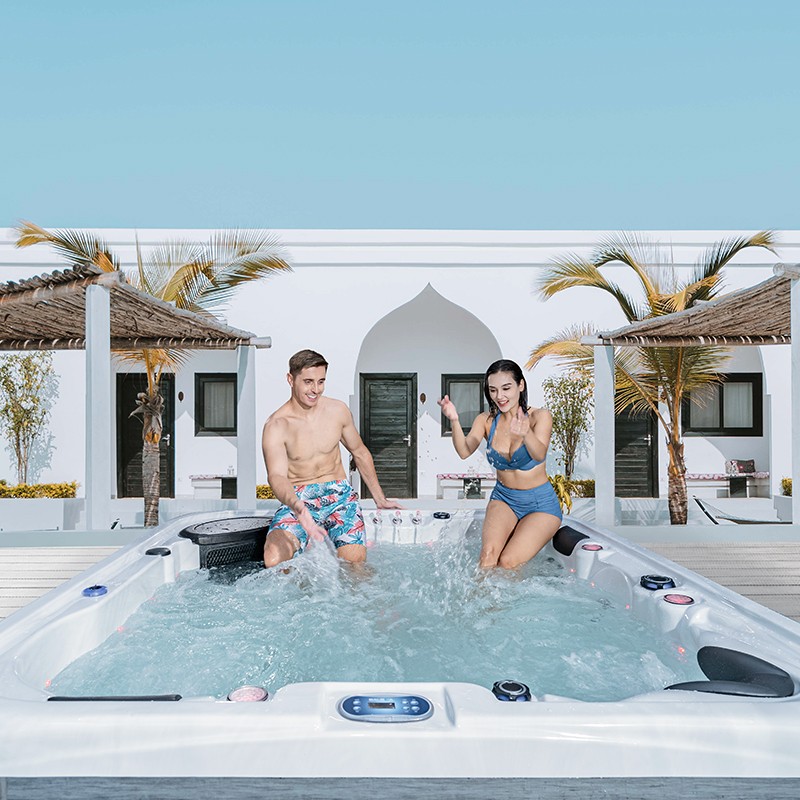
Γιατί οι επαγγελματικές συστάσεις δίνουν έμφαση στα επίπεδα χλωρίου χωρίς χλώριο για τις μπανιέρες κολύμβησης-υδρομασάζ;
Η μέτρηση «επίπεδο ελεύθερου χλωρίου» είναι μια μέτρηση που επισημαίνεται επανειλημμένα σε όλες τις επαγγελματικές οδηγίες σχετικά με την ποιότητα του νερού στην μπανιέρα-υδρομασάζ.
Αυτό συμβαίνει επειδή:
• Αντανακλά άμεσα την ικανότητα απολύμανσης του νερού
• Λειτουργεί ως κρίσιμος δείκτης για τον προσδιορισμό της ασφάλειας στο νερό
• Συσχετίζεται σε μεγάλο βαθμό με την αποτελεσματικότητα του βακτηριακού ελέγχου
Όταν τα επίπεδα ελεύθερου χλωρίου σε ένα υδρομασάζ κολύμβησης-σπα είναι ανεπαρκή, το νερό δεν μπορεί να θεωρηθεί πραγματικά ασφαλές, ανεξάρτητα από το πόσο καθαρό φαίνεται.